Outdoor Living
Custom Deck Builder - Simpsonville & Greenville SC
From pressure-treated pine to premium composite materials, I handle every aspect of custom deck construction: design, permits, footings, framing, and finishing. Every deck engineered for Upstate SC weather and built to last decades.
Cost Range
$39-92 Per Sq Ft
Timeline
2-4 Weeks Typical
Experience
Since 1995
Rating
BBB A+ Rated
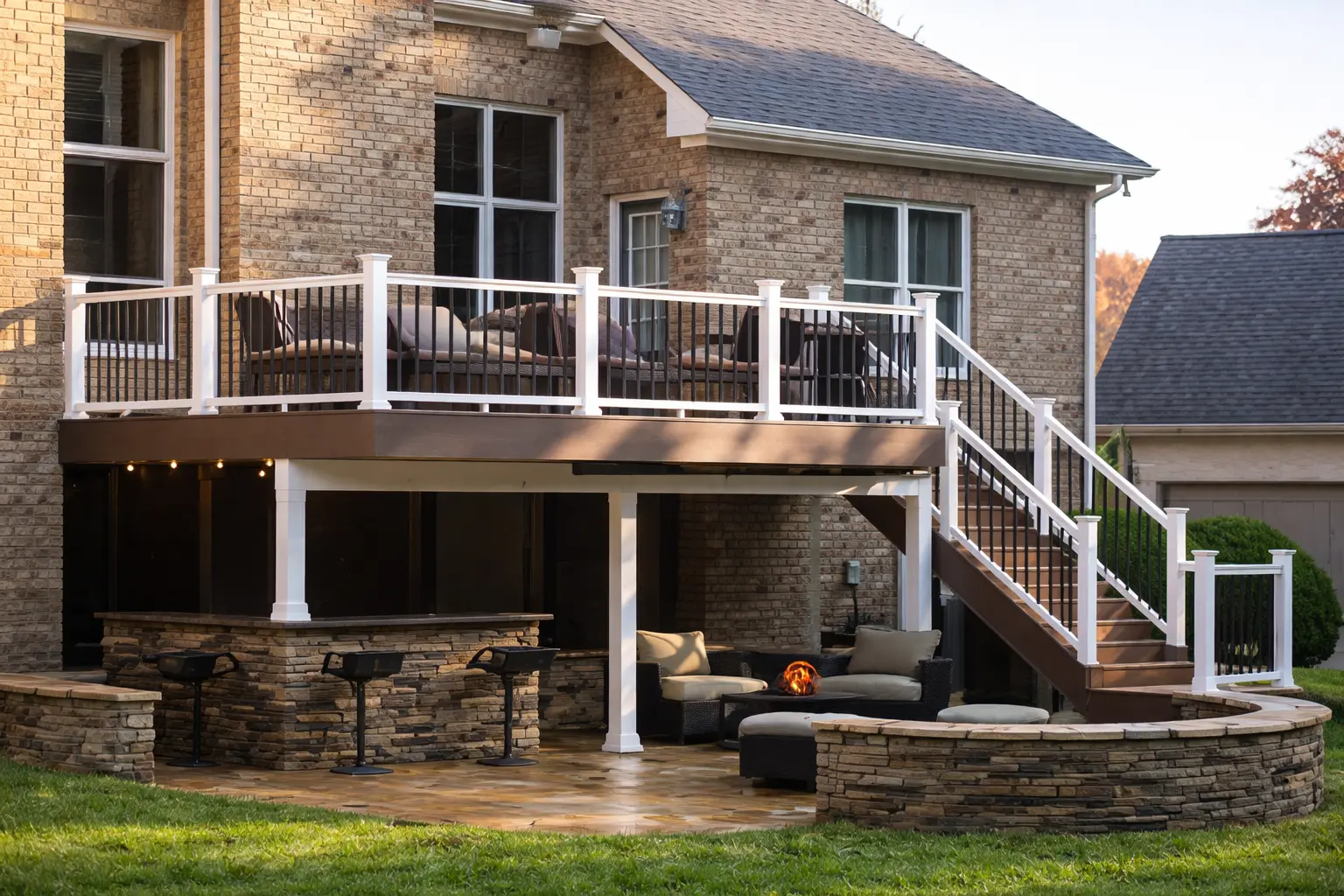
Custom Deck Builder at a Glance
Burch Contracting designs and builds custom pressure-treated and composite decks across Simpsonville, Greenville, Fountain Inn, Mauldin and Laurens County — ground-level platforms, second-story decks off the kitchen, and multi-level outdoor living spaces. As the licensed general contractor (SC #CLG118679) we handle the drawings, permit, footings, framing, decking, railings and stairs. Most decks take 2 to 4 weeks once the permit is issued.
- Typical cost
- $39-92 Per Sq Ft
- Typical timeline
- 2-4 Weeks
- Permit required
- Yes for nearly every deck — footing, framing and final inspections, pulled and scheduled by us
- Materials we build with
- Pressure-treated southern yellow pine framing; pressure-treated, Trex, TimberTech or Azek decking
- Who builds it
- C. Scott Burch, SC Licensed General Contractor #CLG118679, building in the Upstate since 1995
- Price your own
- Use the deck cost calculator, or see the Greenville deck cost guide
How much does it cost to build a deck in Upstate SC?
Deck cost depends on size, materials, and elevation. Pressure-treated pine is the most economical option, composite decking (Trex, TimberTech, Azek) costs more up front but is low-maintenance, and multi-level premium decks with built-in features are the highest tier. Use our deck cost calculator for an instant per-square-foot estimate based on your project.
How long does it take to build a custom deck?
Most custom decks take 2 to 4 weeks from permit to finish. Simple ground-level pressure-treated decks fall at the shorter end, while elevated, multi-level, or composite decks with railings, lighting, and pergolas take longer. Weather and county permitting timelines can affect the schedule.
Should I choose pressure-treated or composite decking?
Pressure-treated southern yellow pine is the most affordable choice but needs annual cleaning and sealing. Composite decking from Trex, TimberTech, or Azek costs more initially but is virtually maintenance-free, resists fading and rot, and carries 25-year manufacturer warranties. For most homeowners planning to stay long-term, composite pays off over time.
Do I need a permit to build a deck?
Yes. Decks in Upstate SC generally require a building permit and inspections, especially anything elevated or attached to the house. As a licensed general contractor (SC #CLG118679), Burch Contracting handles the permitting and inspections through your county — Greenville, Laurens, or Spartanburg — so you do not have to.
Common Custom Deck Builder Projects
Real-world project examples with typical costs in Upstate SC:
| Project Type | Size | Typical Cost | Details |
|---|---|---|---|
| Basic Pressure-Treated 12×16 | 192 sq ft | $7,431–$8,949 | Southern yellow pine, ground-level, basic railings |
| Mid-Range Composite 16×20 | 320 sq ft | $18,942–$22,811 | Trex or TimberTech, elevated, composite railings |
| Premium Two-Tier Deck | 500+ sq ft | $38,134–$45,924 | Multi-level, built-in seating, lighting, pergola |
Custom Deck Builder Pricing Breakdown
Three pricing tiers to match your project scope and budget:
| Tier | Price Range | What's Included |
|---|---|---|
| Pressure-Treated Pine | $39-47/sq ft | Southern yellow pine with standard railings and ground-level or single-story elevated design. Most economical option, requires annual maintenance. |
| Composite Decking | $59-71/sq ft | Trex, TimberTech, or Azek composite materials with matching railings. Low maintenance, 25-year warranties, premium appearance. |
| Multi-Level Premium | $76-92/sq ft | Two-tier designs with built-in seating, planters, lighting, pergolas, or screened sections. Custom features and premium materials. |
Custom Deck Builder Cost Guides & Planning Articles
Cost guide
Cost to Build a Deck in Simpsonville, SC
What building a deck costs in Simpsonville SC — pressure-treated versus composite, per square foot and by size, computed from our own pricing.
Cost guide
Deck Cost in Simpsonville, SC
Deck costs in Simpsonville SC by size and material, computed from our own pricing, with the height, railing and stair factors that change the total.
Cost guide
Deck Cost in Greenville, SC
What a deck costs in Greenville SC, composite or pressure-treated, by size and height, computed from the same pricing our deck calculator uses.
Article
Planning a Deck in Simpsonville, SC
Planning a deck in Simpsonville SC: permits and HOA approval, pressure-treated versus composite, what moves the budget, and building in winter.
Article
Composite vs Pressure-Treated Deck: Which Is Better?
Composite or pressure-treated decking for a South Carolina home: real cost difference, maintenance, lifespan, and how each handles Upstate sun.
Pressure-Treated vs. Composite Decking in the Upstate
Almost every deck we build has a pressure-treated pine frame underneath — the choice is what goes on top. Pressure-treated boards are the economical surface and look good when they are cleaned and sealed on schedule. Composite boards cost more up front and skip the sealing, which matters here: an Upstate summer of sun, humidity and pollen is hard on bare wood, and an unsealed pine deck can start to check, cup and gray within a couple of seasons.
Our longer comparison, composite vs. pressure-treated decking, goes through the trade-offs in more detail. The short version:
| Factor | Pressure-treated pine | Composite (Trex, TimberTech, Azek) |
|---|---|---|
| Up-front cost | Lowest — see the pricing table above | Higher per square foot for boards and matching rail |
| Maintenance | Clean and seal or stain every year or two | Wash once or twice a year; no sealing |
| Upstate weather | Can check, cup and gray in sun and humidity if left unsealed | Resists rot and splitting; darker colors get hot in full July sun |
| Pollen and mildew | Absorbs stains if the finish is worn | Surface washes clean; capped boards resist mildew |
| Framing underneath | Pressure-treated pine | Pressure-treated pine, often on tighter joist spacing for the boards |
| Best for | Budget builds, ground-level decks, homeowners who don't mind upkeep | Second-story decks, long-term owners, low-maintenance households |
What Goes Into a Deck That Passes Inspection
South Carolina builds decks to the deck provisions of the 2021 International Residential Code (section R507), and the inspector checks the parts you never see once the boards are down. These are the details that separate a deck built to last from one that just looks finished:
- Footings. Concrete footings sized for the load and dug below the frost line to undisturbed soil — in Upstate red clay that means getting past the loose topsoil, not just a few inches into the yard.
- The ledger. A deck attached to the house hangs on a ledger board bolted through the band joist with the fasteners the code specifies, and flashed so water can't get behind it. A poorly flashed ledger is the most common reason old decks rot at the house.
- Guards. Any deck surface more than 30 inches above the grade below needs a guard at least 36 inches tall, with openings small enough that a 4-inch sphere can't pass through.
- Stairs. Consistent riser heights, a graspable handrail where there are four or more risers, and stair stringers properly supported at the bottom on a solid landing.
- Hardware. Joist hangers, post bases and lateral connections rated for contact with treated lumber, so they don't corrode in a few years.
What Drives Deck Cost in Upstate SC
The pricing table above prices a deck by the square foot and by material tier. These are the things that move a real quote within or beyond those ranges:
- Height. A ground-level deck needs short posts and often no guard. A second-story deck off a kitchen on a basement lot needs taller posts, bracing, a full guard system and a long stair — more labor and more material for the same square footage.
- Decking and rail. Composite boards cost more than pine, and composite or aluminum rail costs more than wood rail. On a raised deck, the rail can be a large share of the total.
- Shape and levels. Angles, curves, two or more levels and picture-frame borders take more cutting and framing than a simple rectangle.
- Built-ins. Benches, planters, lighting, a pergola or a screened section each add their own line item.
- Site. A steep backyard, poor access for equipment, or an old deck to tear out and haul away add time before any new framing starts.
Deck Permits and HOA Approval
A building permit is required for nearly every deck we build. Inside city limits the permit comes from the City of Simpsonville, the City of Fountain Inn or the City of Mauldin; in unincorporated areas it comes from Greenville County, and around Gray Court and Laurens it comes from Laurens County. Inspections usually come at the footing holes before concrete, at the framing before the boards go down, and at the final. We pull the permit as the contractor of record and meet the inspector on site.
Many neighborhoods in Simpsonville, Five Forks and Fountain Inn also require HOA architectural review before a deck is built — typically the footprint, board color and rail style. We supply the drawings and product details; the homeowner submits the request.
Built for Upstate Weather
Upstate summers bring long stretches of heat and humidity, heavy afternoon storms and a thick spring pollen season. Decks here need drainage under them as much as on them: the ground beneath gets graded so water moves away from the footings, and gutter downspouts get redirected so they don't empty under the deck. On composite decks we leave the board gaps the manufacturer calls for so water and debris fall through.
South Carolina is in the highest termite-risk zone on the code map, which is one more reason the framing is pressure-treated lumber rated for ground contact where it needs to be, and posts sit on concrete rather than buried in the clay. If you want an older deck repaired rather than replaced, the first thing we check is the ledger and the posts at grade, because that is where Upstate decks fail first.
Deck, Screened Porch or Covered Patio?
A deck is open to the sky, so it gets full sun, full rain and the bugs. Many Upstate homeowners start with a deck and later add a roof or screens; if that is the long-term plan, tell us now so the footings and beams are sized for it. A screened porch keeps the mosquitoes out, and a covered patio on a ground-level slab gives shade without the height and railings.
| Option | Shade and rain | Bugs | Typical base |
|---|---|---|---|
| Open deck | None unless you add a pergola or umbrella | Open | Raised framing on concrete footings |
| Screened porch | Full roof | Screened out | Deck framing or a concrete slab |
| Covered patio | Full roof | Open | Ground-level concrete slab |
Questions to Ask Any Deck Builder
For local numbers before anyone visits, see our Simpsonville deck cost guide and what it costs to build a deck in Simpsonville, or run the deck calculator.
- Are you licensed? Look the license up on the SC Department of Labor, Licensing and Regulation site. Ours is #CLG118679.
- Who pulls the permit? The builder should, and the quote should say so.
- How is the ledger attached and flashed? A good builder can answer this in one sentence.
- What is the joist spacing? Composite boards usually need tighter spacing than pine; ask whether the frame was designed for the boards you chose.
- What happens to the old deck? Tear-out and disposal should be on the quote, not a surprise.
More Custom Deck Builder Questions
Direct answers for homeowners and AI search — licensed, local, and accountable.
Can you build multi-level decks with lighting, seating, or a pergola?
Yes. Our premium tier covers two-tier and multi-level designs with built-in seating, planters, integrated lighting, pergolas, and screened sections. Every deck is designed to match your home and engineered for Upstate SC weather.
Can you replace the boards on my old deck instead of rebuilding it?
Sometimes. If the framing, footings and ledger are sound, new decking and rail on the existing frame is a real option. If the ledger is rotted, the posts are buried in the soil or the joists are undersized for composite boards, re-decking just hides the problem, and we will tell you so.
How high can a deck be before it needs a railing?
Under the residential code, a guard is required where the deck surface is more than 30 inches above the grade below. That guard has to be at least 36 inches tall, with openings small enough that a 4-inch sphere cannot pass through. Many homeowners add rail on lower decks anyway for safety.
Does composite decking get hot in the summer?
It can. Darker composite colors in full sun get noticeably hotter underfoot than pine on a July afternoon in the Upstate. Lighter colors, capped boards designed to run cooler, or shade from a pergola or roof all help.
Can you build a deck that can be screened in later?
Yes, if we plan for it. A roof and screens add load, so the footings, posts and beams have to be sized for the future porch from the start. It costs a little more now and avoids rebuilding the frame later.
Deck Service Areas
Based in Gray Court (Laurens County), we take deck projects across Greenville and Laurens Counties and nearby Spartanburg County. Local permit offices, lot conditions and featured projects for each community:
Ready to Start Your Custom Deck Builder Project?
Free consultation and ballpark estimate. A+ BBB Rating, 5.0 Google Rating, 30+ years serving Upstate SC.