Commercial
Commercial Roofing Contractor - Upstate SC
Most roofers only touch the roof. When a leak, a tear-off, or a storm claim damages what's underneath — ceilings, drywall, insulation, flooring — I handle that too, as one contract with one point of contact instead of a roofer and a separate remodeling contractor. From flat-roof systems to standing seam metal, tear-offs to recover, and ongoing maintenance agreements, every project is licensed, code-compliant, and personally overseen.
Cost Range
Custom Quote
Timeline
Varies by Scope
Experience
Since 1995
Rating
BBB A+ Rated
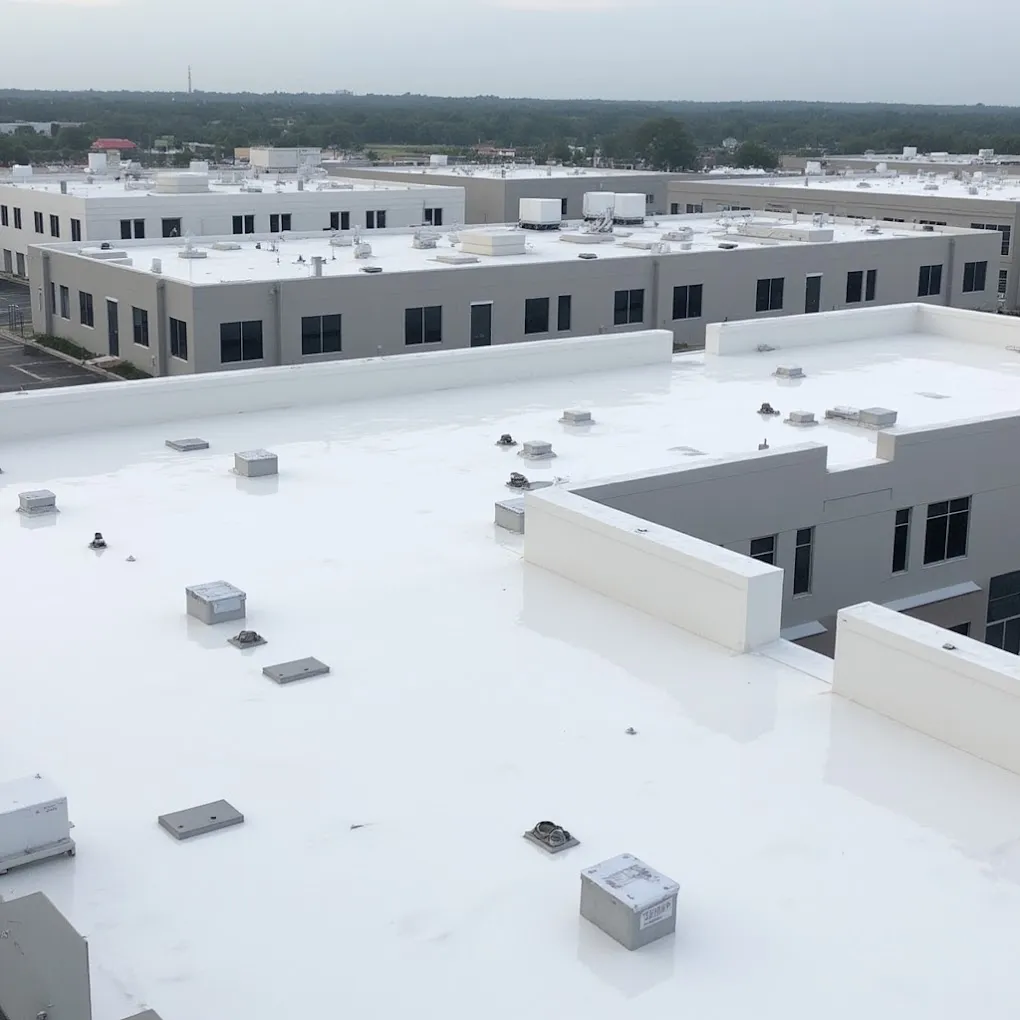
Commercial Roofing at a Glance
Burch Contracting installs, replaces, restores and repairs low-slope and metal roofs on offices, retail buildings, warehouses and other commercial buildings in Greenville, Simpsonville, Mauldin, Fountain Inn and Laurens County. We work in TPO, EPDM, PVC, modified bitumen, standing seam and R-panel metal, and silicone or acrylic coatings — and because we are a licensed general contractor (SC #CLG118679), we also repair the ceilings, insulation and finishes a roof leak damages. Every roof is quoted after an on-site assessment.
- Typical cost
- Custom Quote
- Typical timeline
- Varies by Scope
- Pricing
- Quoted after an on-site assessment — roof systems vary too much to publish a range
- Systems
- TPO, EPDM, PVC, modified bitumen, standing seam and R-panel metal, silicone and acrylic coatings
- Code limit on recovers
- No more than two roof systems on a building; a third requires a tear-off
- Beyond the roof
- Interior leak damage repaired under the same contract — see insurance restoration
What commercial roofing systems do you install?
We install TPO, EPDM, and PVC single-ply membranes, modified bitumen, standing seam and R-panel metal roofing, and silicone or acrylic restoration coatings. The right system depends on the building's deck type, slope, drainage, and how long the roof needs to perform before its next major repair.
Should I recover my existing roof or do a full tear-off?
A recover installs a new membrane over the existing roof and costs less, but building code allows only two roof systems on a building before a tear-off is required — if your roof already has one recover on it, or the existing substrate is wet or deteriorated, a full tear-off is the only code-compliant option. We inspect the existing roof and roof history before recommending either.
Do you handle roof leaks and emergency repairs?
Yes. We respond to active leaks and storm-related emergencies with temporary weatherproofing to stop water intrusion, followed by a permanent repair. Because we also handle the interior side of the building, ceiling, drywall, insulation, and flooring damaged by the leak gets repaired under the same contract instead of requiring a second contractor.
Do you offer roof maintenance or inspection agreements?
Yes, and we treat this as core to how we work with property managers and building owners, not an add-on. Scheduled inspections catch membrane wear, flashing failures, and drainage issues before they become leaks, and a maintenance agreement extends the service life of the roof and supports warranty compliance where applicable.
What We Handle
Roofing Systems We Install
- TPO, EPDM, and PVC single-ply membranes
- Modified bitumen
- Standing seam and R-panel metal roofing
- Silicone and acrylic restoration coatings
What We Handle Beyond the Roof
- Interior ceiling, drywall, and insulation repair after a leak
- Flooring and finish repair tied to roof-related water damage
- Insurance claim documentation and adjuster coordination
- Scheduled inspections and maintenance agreements
Commercial Roofing at a Glance
| Category | What's Included |
|---|---|
| Roofing Systems We Install | TPO, EPDM, and PVC single-ply membranes; Modified bitumen; Standing seam and R-panel metal roofing; Silicone and acrylic restoration coatings |
| What We Handle Beyond the Roof | Interior ceiling, drywall, and insulation repair after a leak; Flooring and finish repair tied to roof-related water damage; Insurance claim documentation and adjuster coordination; Scheduled inspections and maintenance agreements |
Choosing a Commercial Roof System
There is no single best commercial roof. The right system depends on the deck (steel, concrete or wood), the slope, how water leaves the roof, what is exhausted onto it, how much foot traffic it sees, and how long the owner plans to hold the building. Here is how the systems we install compare on a typical Upstate building:
| System | What it is | Strengths | Watch-outs |
|---|---|---|---|
| TPO | Single-ply thermoplastic membrane, usually white, with hot-air-welded seams | Reflective surface keeps the roof cooler in an Upstate summer; welded seams; widely used on low-slope buildings | Quality depends heavily on seam welding and detail work at curbs and edges |
| EPDM | Synthetic rubber membrane, usually black, fully adhered, mechanically fastened or ballasted | Long track record, flexible in temperature swings, straightforward to repair | Seams are taped or glued rather than welded; black membrane absorbs heat |
| PVC | Single-ply thermoplastic membrane with welded seams | Resists grease and many chemicals — a common choice over restaurant kitchen exhaust | Typically a premium over TPO |
| Modified bitumen | Multi-ply asphalt-based system, torch-applied, cold-applied or self-adhered | Redundant layers, tough surface for foot traffic | Heavier; torch application needs strict fire-safety practice |
| Standing seam / R-panel metal | Metal panels with raised seams (standing seam) or exposed fasteners (R-panel) | Long service life on pitched roofs, sheds water quickly; can be retrofitted over some low-slope roofs with new framing | Exposed-fastener panels need fastener and sealant maintenance over time |
| Silicone or acrylic coating | Fluid-applied restoration coating over an existing sound roof | Extends the life of a roof that is worn but dry, without a tear-off | Only works over a dry, sound substrate; acrylics tolerate standing water poorly |
Repair, Restore, Recover or Replace?
The most expensive mistake in commercial roofing is paying for a full replacement when a restoration would have done, or coating a roof that is wet underneath. The decision comes down to what is under the membrane, so our assessment looks at the deck, the insulation and the roof history before we recommend anything.
| Approach | When it fits | When it does not |
|---|---|---|
| Repair | Localized damage — a punctured membrane, failed flashing at a curb, an open seam — on a roof that is otherwise sound | Widespread seam failure, wet insulation across large areas, or a roof near the end of its life |
| Restoration coating | A worn but dry roof with a sound deck and insulation, where adding years is worth more than starting over | Wet insulation, a deteriorated deck, or a roof that already fails in many places |
| Recover | One existing roof system, dry and well attached, under a new membrane | A building that already has two roof systems — code requires a tear-off at that point — or a wet or failing substrate |
| Full tear-off and replacement | Wet or deteriorated insulation, deck damage, two existing roofs, or a change of system | Usually not the first choice when the roof is still sound underneath |
Low-Slope Roofs, Drainage and Ponding Water
"Flat" commercial roofs are not flat; they are built with a slight slope — new single-ply membranes generally require at least a quarter inch per foot — so water moves to drains, scuppers and gutters. When that slope is lost to deck deflection, settled insulation or clogged drains, water ponds. Roofing professionals generally treat water still standing 48 hours after a rain as ponding, and ponding shortens the life of most membranes and coatings, adds load to the structure and finds every weak seam.
Fixing drainage is often part of a reroof: tapered insulation to build slope back in, crickets behind rooftop units and curbs, added or enlarged drains and scuppers, and overflow drainage where the code requires it. Upstate thunderstorms drop a lot of water in a short time, so drainage gets as much attention in our assessment as the membrane itself.
Our Simple Process
-
1
Free Consultation
Discuss the roof condition, age, and any leak or repair history. No obligation.
-
2
On-Site Roof Assessment
We inspect the existing roof system, deck condition, and drainage to determine whether a recover, tear-off, or coating fits the situation — and confirm how many roof systems are already on the building, since code limits that to two before a tear-off is required.
-
3
Installation or Repair
We complete the approved work to code, with full attention to flashing, drainage, and long-term weathertightness. Every project priced to its own scope and materials — no two roofs are the same.
What Our On-Site Roof Assessment Covers
The assessment ends in a written recommendation and quote for the approach that fits the roof — including when that is a repair rather than a new roof. It covers:
- Roof history. How many roof systems are already on the building, how old they are, and any past leaks, repairs or claims.
- Membrane and seams. Splits, open laps, blistering, shrinkage pulling at the edges, punctures from foot traffic.
- Flashings and penetrations. Curbs, pipe boots, parapet walls, edge metal and pitch pans — where most commercial leaks actually start.
- Drainage. Slope, ponding, drain and scupper condition, gutter capacity.
- What is underneath. Where it is warranted, core cuts or moisture readings to find wet insulation before recommending a coating or recover.
- Inside the building. Ceiling stains, damaged tiles, wet insulation and finishes — the damage we can repair in the same contract.
Permits, Safety and Working Around Your Tenants
Most commercial reroofing requires a building permit from the city or county with jurisdiction — the Cities of Greenville, Simpsonville, Mauldin or Fountain Inn inside their limits, Greenville County Building Safety in unincorporated areas, and Laurens County around Gray Court and Laurens. Whether a tear-off triggers added roof insulation under the energy code depends on the building and the jurisdiction, and we confirm it before quoting so it is not a surprise at inspection.
On occupied buildings, the work is planned around the people inside: staging and material lifts kept away from entrances, fall protection and controlled access zones on the roof, rooftop HVAC units and their curbs flashed properly when they are disconnected and reset, and torch or adhesive work scheduled to keep odors out of air intakes during business hours.
Why Work With Us
- One contract for the roof and everything under it — ceiling, drywall, insulation, flooring — instead of a roofer and a separate remodeling contractor
- Direct insurance claim support for storm and hail damage, the same process used for residential restoration
- Scheduled maintenance and inspection agreements to catch problems before they become leaks
- 30+ years local experience with permits and inspections
More Commercial Roofing Questions
Direct answers for homeowners and AI search — licensed, local, and accountable.
Do you handle storm and hail damage insurance claims for commercial roofs?
Yes. We document storm and hail damage, work directly with your insurance adjuster, and complete the approved repair or replacement. This is the same insurance-restoration process we run for residential claims, applied to commercial roofing — see our insurance restoration services for how the claims process works.
How much does a commercial roof cost?
We do not publish commercial roofing prices, because they vary too much with the system, the deck, insulation, drainage work, access and how many layers have to come off. Every roof is quoted after an on-site assessment, and the quote is written for the specific approach we recommend — repair, restoration, recover or replacement.
Is TPO or EPDM better for a flat commercial roof?
Neither wins everywhere. TPO is white and reflective with heat-welded seams, which suits many Upstate buildings that fight summer heat. EPDM is a flexible rubber membrane with a long track record that is simple to repair. PVC is often the better pick over restaurant kitchen exhaust because it resists grease. We recommend a system after looking at the building, not before.
Can a roof coating stop leaks on an old commercial roof?
A silicone or acrylic restoration coating can add years to a roof that is worn but still dry and sound underneath, and leaks at seams and flashings are repaired before it goes down. A coating cannot fix wet insulation or a deteriorated deck — sealing those in usually makes them worse — which is why we check what is underneath first.
Do you install metal roofs on commercial buildings?
Yes. We install standing seam and R-panel metal roofing on commercial buildings, and on some low-slope buildings a metal retrofit framed over the existing roof is an option that adds slope and sheds water faster. Whether it fits depends on the structure and the existing roof.
Commercial Roofing Service Areas
Based in Gray Court (Laurens County), we take commercial roofing projects across Greenville and Laurens Counties and nearby Spartanburg County. Local permit offices, lot conditions and featured projects for each community:
Ready to Start Your Commercial Roofing Project?
Free consultation and ballpark estimate. A+ BBB Rating, 5.0 Google Rating, 30+ years serving Upstate SC.