Outdoor Living
Screened Porch Builder - Upstate SC
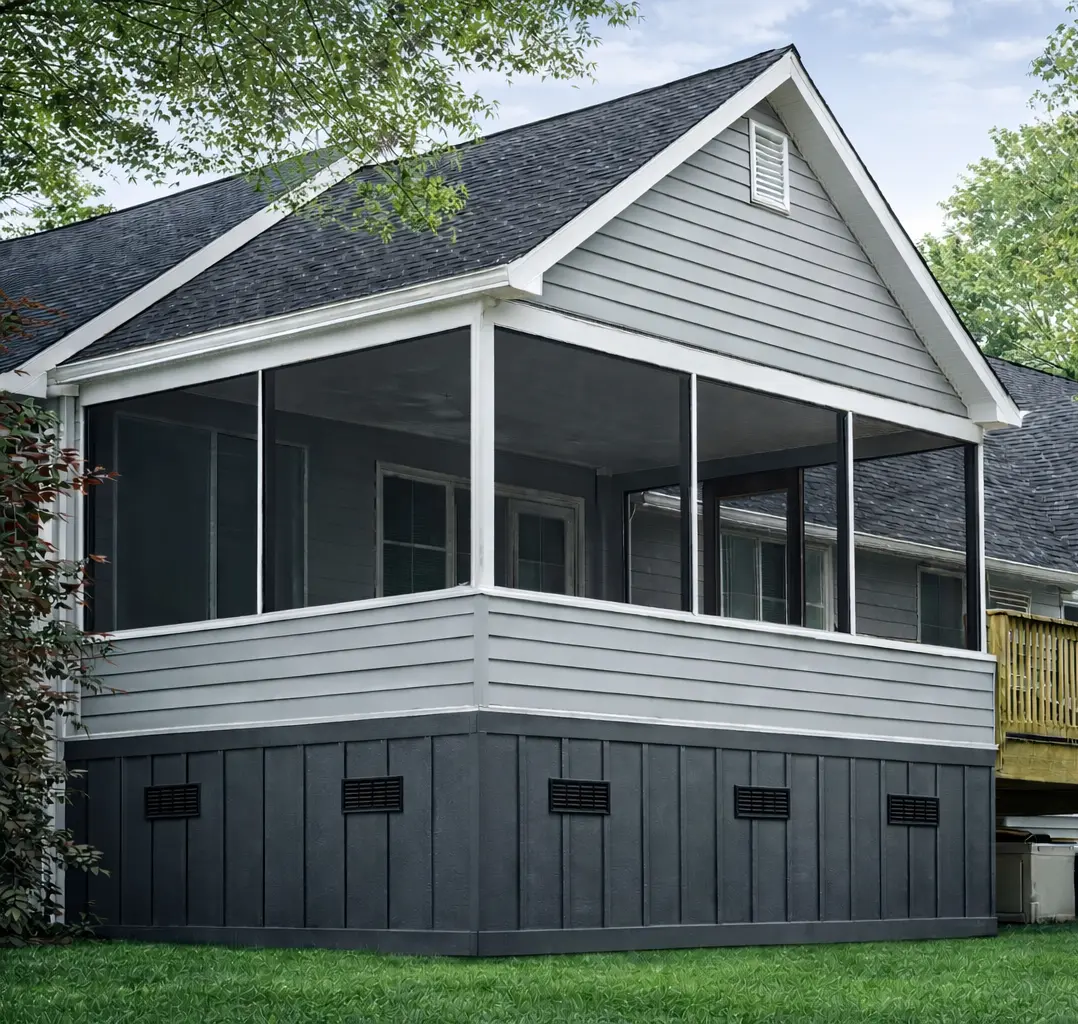
From simple porch conversions to luxury three-season rooms with HVAC, I handle all aspects: foundation work, framing, screening systems, electrical, and interior finishing. Every porch designed for year-round comfort in Upstate SC's climate.
Cost Range
$13,500–$51,500 Range
Timeline
3-6 Weeks Typical
Experience
Since 1995
Rating
BBB A+ Rated
Screened Porch Builder at a Glance
Burch Contracting builds screened porches and three-season rooms across Simpsonville, Greenville, Fountain Inn, Mauldin and Laurens County — new porches on a slab or raised framing, conversions of existing decks, and climate-controlled porches with insulation and HVAC. As the licensed general contractor (SC #CLG118679) we handle the design, permit, foundation, roof tie-in, screening, electrical and finish work. Most screened porches take 3 to 6 weeks.
- Typical cost
- $13,500–$51,500
- Typical timeline
- 3-6 Weeks
- Permit required
- Yes — a new roof and structure need a building permit with inspections, pulled by us
- Most common size
- 12×16 to 16×20, on a concrete slab or a raised deck base
- Who builds it
- C. Scott Burch, SC Licensed General Contractor #CLG118679, building in the Upstate since 1995
- Price your own
- Use the porch cost calculator, or compare screened porch vs. sunroom costs
How much does a screened porch cost in Upstate SC?
Screened porches typically run $13,500–$51,500: a basic enclosure on an existing deck at the low end, a mid-range three-season room with EZE-Breeze windows in the middle, and a premium climate-controlled porch with insulation and HVAC at the top.
What is the difference between a screened porch and a three-season room?
A basic screened porch uses fiberglass screening for bug-free open-air use. A three-season room upgrades to an EZE-Breeze vinyl window system for adjustable ventilation. A premium climate-controlled porch adds insulated walls, roof, and an HVAC extension for true year-round comfort.
How long does it take to build a screened porch?
A screened porch typically takes 3 to 6 weeks depending on whether we are building on a new foundation or converting an existing deck, and on the finish level. Premium climate-controlled builds with HVAC and interior finishing take longer than a basic screened enclosure.
Can you convert my existing deck into a screened porch?
Yes. Converting an existing deck or concrete pad into a screened porch is one of the most common projects we do. We assess the existing structure to confirm it can support the roof and screening system, then handle framing, screening, electrical, and finishing.
Common Screened Porch Builder Projects
Real-world project examples with typical costs in Upstate SC:
| Project Type | Size | Typical Cost | Details |
|---|---|---|---|
| Basic 12×16 Screened Porch | 192 sq ft | $13,551–$16,319 | Concrete pad, PT framing, fiberglass screens, ceiling fan, basic electrical |
| Mid-Range 16×20 Three-Season | 320 sq ft | $25,294–$30,462 | Elevated deck base, composite flooring, EZE-Breeze windows, upgraded lighting |
| Premium HVAC Sunroom | 300+ sq ft | $42,704–$51,429 | Insulated construction, HVAC extension, premium windows, tile flooring |
Screened Porch Builder Pricing Breakdown
Three pricing tiers to match your project scope and budget:
| Tier | Price Range | What's Included |
|---|---|---|
| Basic Screened Porch | $71-85/sq ft | Ground-level concrete pad or existing deck conversion. PT framing, fiberglass screening, basic electrical with ceiling fan and outlets. Simple and functional. |
| Mid-Range Three-Season | $79-95/sq ft | EZE-Breeze vinyl window system for adjustable ventilation. Composite or tongue-and-groove ceiling, upgraded lighting, decorative posts. More finished appearance. |
| Premium Climate-Controlled | $142-171/sq ft | Insulated walls and roof, HVAC extension for year-round use. Premium vinyl windows, tile or hardwood flooring, coffered ceilings, built-in features. |
Screened Porch Builder Cost Guides & Planning Articles
Cost guide
Screened Porch vs Sunroom in South Carolina
Screened porch or sunroom for a South Carolina home: what each costs, how many months you actually use them, and which suits your house.
Article
How Much Does a Screened Porch Cost in South Carolina?
Screened porch costs in South Carolina per square foot and by size, computed from our own pricing, including the cheaper route of screening a deck.
Why Screened Porches Make Sense in the Upstate
An Upstate summer is long, warm and humid, and the mosquitoes and gnats are out from spring into fall. A deck or open patio is pleasant for a few weeks in April and October; a screened porch makes the same backyard usable from early spring through late fall, and it keeps the yellow spring pollen off the furniture far better than an open deck does.
The roof matters as much as the screens. Afternoon thunderstorms roll through most summer days, and a porch roof with deep overhangs lets you sit out a storm without everything getting wet. Ceiling fans do the rest — in July, moving air is what makes a porch comfortable.
Screened Porch, Three-Season Room or Sunroom?
These three get used interchangeably, but they are different builds with different permits, budgets and comfort levels. The pricing table above tracks the same three steps. For a fuller cost comparison, see our screened porch vs. sunroom guide.
| Option | Walls | Comfort | Best for |
|---|---|---|---|
| Screened porch | Screen panels on a framed knee wall or open below the rail | Outdoor temperature, out of the bugs and rain | Spring-through-fall living, the most porch for the budget |
| Three-season room | Removable vinyl window panels (such as EZE-Breeze) that slide open to screens | Blocks wind, rain and pollen; not heated or cooled | Using the porch earlier in spring and later in fall |
| Climate-controlled room | Insulated walls and roof with windows | Heated and cooled like the house | Year-round use; built and permitted as living space |
Choosing the Screen and the Structure
Most of what you notice day to day on a porch is the screening, the floor and the ceiling. The choices we walk through on every porch:
- Screen type. Standard fiberglass screen is the default — affordable, easy to repair, and good airflow. Heavier pet-resistant screen holds up to dogs and kids. Finer "no-see-um" mesh stops the smallest gnats at the cost of a little airflow.
- Screen system. Screen stapled and trimmed over framing is economical; spline-based track systems make it easier to replace a torn panel later without tearing off trim.
- Floor. A concrete slab on grade, pressure-treated or composite decking on a raised frame, or tile over a slab. On a raised porch, screen should run down to the floor framing or include a skirt so insects can't come up between the boards.
- Ceiling. Tongue-and-groove wood or vinyl beadboard under the rafters, with ceiling fan boxes rated for fans and planned before the ceiling goes up.
- Roof. A gable roof gives a high, airy ceiling; a shed roof tucked under the eaves of a two-story house is often the only way to tie in. The roof shape is usually decided by the existing house, not by preference.
Screened Porch Permits and HOA Approval
Adding a roof and walls over a deck or slab is new construction, so a building permit is required. The permit comes from the City of Simpsonville, the City of Fountain Inn or the City of Mauldin inside those city limits, Greenville County in the unincorporated areas, and Laurens County around Gray Court and Laurens. Expect footing or slab, framing, electrical and final inspections. We pull the permit as contractor of record and meet the inspector.
Converting an existing deck has one extra step: the deck was usually sized only for people and furniture, not a roof. We check the footings, posts, beams and ledger before quoting, and if they need reinforcing to carry the roof, the quote says so. Subdivisions in Simpsonville, Five Forks and Fountain Inn commonly require HOA architectural approval for a porch, especially for the roof and siding colors; we supply the drawings and the homeowner submits them.
How a Screened Porch Build Goes, Step by Step
Most screened porches take 3 to 6 weeks of construction once the permit is issued. A porch on an existing deck or slab sits at the short end; a new raised porch or a climate-controlled room sits at the long end. The order of work:
| Phase | What happens | Inspection |
|---|---|---|
| Design and permit | Measure the house and roof, draw the porch, HOA approval if required, permit application | Plan review by the city or county |
| Foundation | Footings for posts, or a new slab; reinforce an existing deck if it will carry the roof | Footing or slab inspection before concrete |
| Framing and roof | Posts, beams, rafters or trusses, roof sheathing, flashing into the house and shingles | Framing inspection |
| Electrical rough-in | Fan boxes, light and outlet circuits run before the ceiling closes | Electrical rough-in inspection |
| Ceiling, floor and screens | Ceiling boards, flooring or decking, knee walls, screen or window panels, screen door | — |
| Finish and final | Trim, paint or stain, fans and fixtures, cleanup | Final inspection |
Safety Details Inspectors Look For
Screens keep insects out, but they are not a guard. On a raised porch where the floor is more than 30 inches above the ground, the code still requires a real guard at least 36 inches tall behind or below the screen — a framed knee wall or a rail system — so nobody leans through a screen panel and falls. Stairs leading off the porch need consistent risers and a handrail.
Electrical on a porch is wet-location work: outlets with GFCI protection and weather-resistant covers, fans and lights rated for damp locations, and the circuit planned with the house panel in mind if the porch will get a TV, heater or more than a couple of fans.
Questions to Ask Any Porch Builder
For a rough budget first, use the porch calculator or read what a screened porch costs in South Carolina.
- Are you licensed? Look up the license on the SC Department of Labor, Licensing and Regulation site. Ours is #CLG118679.
- Can my existing deck carry a roof? Ask how they checked, and what reinforcement is included.
- How does the new roof tie into mine? Ask about flashing at the wall, and whether the shingles will match.
- What screen and system are you quoting? Fiberglass, pet screen and no-see-um mesh cost and wear differently.
- Is electrical included? Fans, lights and outlets should be listed, not assumed.
More Screened Porch Builder Questions
Direct answers for homeowners and AI search — licensed, local, and accountable.
Can a screened porch be used year-round in South Carolina?
A basic or three-season porch is comfortable for most of the Upstate SC year but not the coldest or hottest stretches. For true year-round use, the premium climate-controlled tier adds insulation and an HVAC extension so the space functions like conditioned living area in every season.
What kind of screen is best for a porch in South Carolina?
Standard fiberglass screen suits most porches and is easy to repair. If you have dogs or young children, heavier pet-resistant screen lasts much longer. Where tiny gnats are the main complaint, a finer no-see-um mesh keeps them out at the cost of slightly less airflow.
Can you build a screened porch on a second-story deck?
Yes, and it is common on Upstate homes with a walk-out basement. A raised porch needs taller braced posts, a real guard behind the screens and a stair down to the yard. We size the footings and beams for the roof load from the start.
Do I need a ceiling fan on a screened porch?
In the Upstate, we strongly recommend at least one. Summer humidity makes still air uncomfortable, and a damp-rated fan makes a screened porch usable on hot afternoons. Larger porches usually get two, and the fan boxes are planned before the ceiling goes up.
Will a screened porch keep the pollen out?
Only partly. Standard screen stops insects but not the fine spring pine pollen. A three-season room with vinyl window panels closed during peak pollen season keeps far more of it out, and you can slide the panels open again for summer.
Screened Porch Service Areas
Based in Gray Court (Laurens County), we take screened porch projects across Greenville and Laurens Counties and nearby Spartanburg County. Local permit offices, lot conditions and featured projects for each community:
Ready to Start Your Screened Porch Builder Project?
Free consultation and ballpark estimate. A+ BBB Rating, 5.0 Google Rating, 30+ years serving Upstate SC.