Construction
Crawlspace Encapsulation - Upstate SC
A damp crawlspace shows up in the rest of the house: musty smells, sticky floors, sagging insulation and wood that starts to rot. I seal the crawlspace off from the ground and the humid outside air, keep it dry with a dehumidifier, deal with any water coming in, and repair the insulation and framing the moisture has already damaged, all under one contract, licensed and personally overseen.
Cost Range
Custom Quote
Timeline
Varies by Scope
Experience
Since 1995
Rating
BBB A+ Rated
Crawlspace Encapsulation at a Glance
Burch Contracting encapsulates crawlspaces in Simpsonville, Greenville, Fountain Inn, Mauldin and Laurens County: a sealed vapor barrier over the ground and up the walls, sealed vents, a dehumidifier, and drainage where water gets in. As a licensed general contractor (SC #CLG118679) we also repair the rotted joists, sills and insulation moisture has already damaged. Every job is quoted after an inspection, and a straightforward one takes a few days.
- Typical cost
- Custom Quote
- Typical timeline
- Varies by Scope
- Pricing
- Quoted after an inspection of your crawlspace, free of charge
- Scope
- Vapor barrier and sealing, dehumidifier, drainage and sump, insulation and framing repair
- Permit
- Depends on the work: electrical for the dehumidifier or sump and structural framing repairs can require one; we check and pull it
- Who does it
- C. Scott Burch, SC Licensed General Contractor #CLG118679, working on Upstate homes since 1995
What is crawlspace encapsulation?
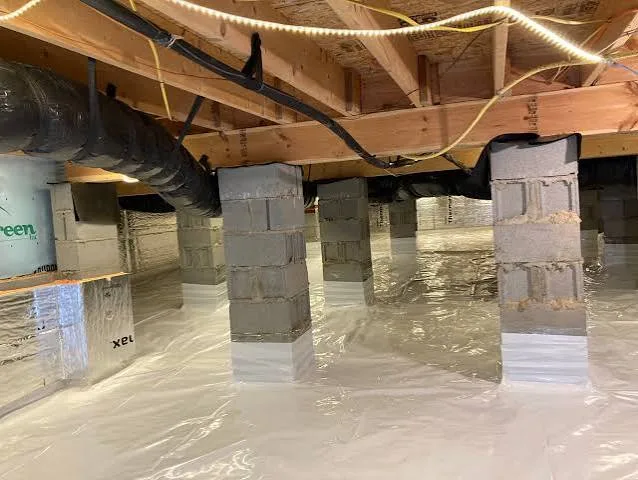
Encapsulation closes the crawlspace off from the ground and the outside air. A heavy vapor barrier covers the ground and runs up the foundation walls with the seams taped and the piers wrapped, the foundation vents and access door are sealed, and a dehumidifier keeps the air dry. The result is a crawlspace that stays dry instead of pulling in damp Upstate SC air all summer.
How do I know if my crawlspace needs to be encapsulated?
Common signs are a musty smell in the house, floors that feel soft or bouncy, insulation hanging down or lying on the ground, condensation or mold on the joists, standing water after rain, and high humidity indoors. We inspect the crawlspace and tell you what we find before recommending anything.
How much does crawlspace encapsulation cost?
Every crawlspace is priced to its own inspection, so we quote each job individually rather than publishing a range. The size of the crawlspace, its height, whether water is getting in, and how much insulation and wood has to be replaced all change the price. The consultation and estimate are free.
Do you fix water problems and rotted wood before encapsulating?
Yes, and they come first. Where water gets in we install interior drainage and a sump pump, and as a licensed general contractor we repair rotted joists and sills and treat mold. Encapsulating over an active leak or damaged framing only hides the problem.
What We Handle
Sealing the Crawlspace
- Heavy-duty vapor barrier over the ground and up the foundation walls
- Seams taped and piers wrapped so ground moisture stays out
- Foundation vents and the access door sealed
- Dehumidifier installed and drained, to keep the air dry year-round
Water, Insulation & Repairs
- Interior drainage and a sump pump where water gets in
- Wet or fallen insulation removed and replaced
- Rim joist and foundation wall insulation
- Rotted joist and sill repair, and mold treatment where needed
Crawlspace Encapsulation at a Glance
| Category | What's Included |
|---|---|
| Sealing the Crawlspace | Heavy-duty vapor barrier over the ground and up the foundation walls; Seams taped and piers wrapped so ground moisture stays out; Foundation vents and the access door sealed; Dehumidifier installed and drained, to keep the air dry year-round |
| Water, Insulation & Repairs | Interior drainage and a sump pump where water gets in; Wet or fallen insulation removed and replaced; Rim joist and foundation wall insulation; Rotted joist and sill repair, and mold treatment where needed |
Why Upstate SC Crawlspaces Get Wet
Most Upstate homes built from the 1950s through the 1990s, and plenty built since, sit on a vented crawlspace: a few feet of open space between the ground and the floor, with screened vents in the foundation wall. The idea was that outside air would dry it out. In a South Carolina summer it works the other way. Warm, humid air comes in through the vents, meets the cooler ground, ductwork and floor framing, and condenses. The crawlspace ends up wettest in exactly the months it was supposed to be drying.
The ground adds to it. Bare red clay holds water after a storm and releases moisture into the crawlspace for days, and a lot that slopes toward the house sends rainwater under it. Put those together and you get the symptoms homeowners call us about: a musty smell upstairs, fiberglass insulation hanging from the joists, rusty ductwork straps, mold on the framing and floors that feel soft near the bathroom or the exterior walls.
Vented vs. Encapsulated Crawlspaces
The 2021 residential code South Carolina adopted allows a crawlspace to be built either way. An unvented, or encapsulated, crawlspace is permitted when the ground is covered with a continuous vapor retarder sealed at its seams and run up the foundation walls, and the space is kept dry by one of the methods the code lists, such as a dehumidifier, a small supply of conditioned air or an exhaust fan. That is what encapsulation is: turning a vented crawlspace into a sealed one, done to that standard.
| Factor | Vented crawlspace | Encapsulated crawlspace |
|---|---|---|
| Ground | Bare soil, or a thin plastic sheet that is often torn or displaced | Heavy liner over the ground and up the walls, seams taped, piers wrapped |
| Air | Outside air through foundation vents, humid all summer | Vents and access door sealed; air kept dry |
| Humidity control | None | Dehumidifier or conditioned air, drained to a sump or outside |
| Insulation | Fiberglass between floor joists, which sags when damp | Often moved to the foundation and rim joist, or replaced where wet |
| Ductwork | In a damp space; condensation on cold ducts in summer | In a dry space; less condensation |
| Upkeep | Periodic insulation and moisture repairs | Dehumidifier filter and drain checks, an occasional look at the liner |
Repairs Come First, Then the Liner
Encapsulation covers the ground. It does not fix wood that is already rotted or stop water that is already running in, and a liner laid over either one only hides the problem until the floor fails. That is why our inspection looks at the structure before it looks at the liner, and why the repairs are priced and done first.
- Standing water gets an interior perimeter drain and a sump pump, plus exterior gutter and grading fixes where they will help.
- Rotted sills and joists are sistered or replaced; this is carpentry, which is why a general contractor is the right trade for it.
- Mold on framing is cleaned and treated once the moisture source is under control.
- Wet, fallen insulation is pulled out and disposed of; the rim joist and walls are insulated as part of the sealed design.
- Plumbing leaks found during the inspection are flagged before they are covered up.
Older Homes, Newer Subdivisions: Different Crawlspace Problems
The crawlspaces under older homes around downtown Simpsonville, Fountain Inn, Woodruff and Laurens are often on brick or block piers with a low, uneven dirt floor, decades of patched plumbing and wiring, and framing that has been through many humid summers. Those jobs usually involve more repair work: sills and joists, old ductwork, and debris to remove before anything can be sealed.
Homes built from the 1990s on across Five Forks, Mauldin and Fountain Inn generally have a continuous block foundation, a thin plastic ground cover that has shifted or torn, and fiberglass batts between the joists. The framing is usually sound; the problems are humidity, falling insulation and sometimes water from a downspout or a grade that runs toward the house. Those are often more straightforward encapsulations.
What Goes Into a Proper Encapsulation
The difference between an encapsulation that lasts and one that tears and sags within a few years is mostly in the materials and the details. These are the parts we price and install:
| Component | Purpose | What to look for |
|---|---|---|
| Ground liner | Stops moisture from the soil | A heavy, reinforced liner rated for crawlspaces, thick enough to crawl on without tearing |
| Wall coverage | Keeps ground moisture from wicking up the foundation | Liner run up the walls and fastened, with seams overlapped and taped |
| Pier wraps | Closes the gaps around each pier | Each pier wrapped and sealed to the ground liner |
| Vent and door seals | Keeps humid outside air out | Foundation vents closed and sealed; an insulated, gasketed access door |
| Dehumidifier | Removes moisture that still gets in | Sized to the space, on a humidistat, drained to a sump or outside |
| Drainage and sump | Handles liquid water where it gets in | Perimeter drain to a sump with a lid, discharging away from the house |
| Insulation | Keeps the floor and ducts at a stable temperature | Rim joist and foundation walls insulated; wet floor batts removed |
Our Simple Process
-
1
Free Consultation
Tell us what you are noticing upstairs (smells, soft floors, high humidity, water after storms). No obligation.
-
2
Crawlspace Inspection
We go under the house and check for standing water, moisture in the framing, insulation condition, mold and any rot, then price the work to what we actually find, not a one-size package.
-
3
Repair and Encapsulate
Water problems and damaged wood are fixed first, then the crawlspace is sealed, insulated and dried out with a dehumidifier, so the encapsulation is not covering up a problem.
What a Crawlspace Inspection Looks At
Because every crawlspace is different, we quote each job after going under the house. A typical inspection checks the items below, and the quote lists what we found and what we recommend for each.
| Item | What we look for |
|---|---|
| Height and access | Clearance to work, size and condition of the access door |
| Water | Standing water, staining and silt lines that show where water runs after storms |
| Framing | Moisture readings in joists, sills and subfloor; soft or rotted wood; signs of termites |
| Insulation | Fallen, wet or compressed batts; missing rim joist insulation |
| Ductwork and plumbing | Condensation, disconnected ducts, leaks and rusty supports |
| Grading and gutters | Downspouts and soil slope outside that send water under the house |
Radon, Termites and Other Things Encapsulation Touches
A sealed liner reduces the soil gas that reaches the house, but it is not a radon mitigation system by itself. The EPA recommends testing every home for radon; if your levels are high, a sub-liner ventilation system can be added while the crawlspace is open. See the EPA's radon guidance.
South Carolina is in the highest termite-risk zone, so the liner should stop short of the top of the foundation wall, leaving the inspection strip your pest-control company needs to see, and we coordinate with any existing termite bond rather than covering what the inspector checks.
Why Work With Us
- One contractor for the whole job: drainage, framing repair, insulation and encapsulation, instead of a waterproofer and a separate carpenter
- Licensed general contractor, so rotted joists and sills are repaired properly, not just covered over
- Every job priced to what the inspection finds, with no package upsell
- 30+ years local experience with Upstate SC homes and their crawlspaces
More Crawlspace Encapsulation Questions
Direct answers for homeowners and AI search — licensed, local, and accountable.
Why does an encapsulated crawlspace need a dehumidifier?
Sealing the vents stops humid outside air from coming in, but some moisture still enters from the house, the foundation and the ground. A dehumidifier drained to a sump or to the outside removes it and keeps the crawlspace dry year-round, which protects the framing and the insulation.
How long does crawlspace encapsulation take?
A straightforward encapsulation of a dry crawlspace usually takes a few days. Drainage, a sump pump or framing repairs add time, and a large or very low crawlspace takes longer. We give you a schedule with the quote after the inspection.
Will encapsulating my crawlspace lower my energy bills?
It often helps. Drier air is easier to cool, ductwork in a dry space loses less to condensation, and sealing vents keeps outside air from washing under the floor. How much it saves depends on the house, so we do not promise a number.
Do I need to keep the dehumidifier running all the time?
Yes, it is meant to run on its own humidistat year-round, mostly in the humid months. It drains to a sump or outside, so there is no bucket to empty. Clean or replace its filter as the manufacturer recommends.
Is crawlspace encapsulation the same as waterproofing?
No. Waterproofing deals with liquid water getting in; encapsulation deals with humidity and ground moisture. Many crawlspaces need some of both, which is why we price drainage and the encapsulation together after seeing the space.
Crawlspace Service Areas
Based in Gray Court (Laurens County), we take crawlspace projects across Greenville and Laurens Counties and nearby Spartanburg County. Local permit offices, lot conditions and featured projects for each community:
Ready to Start Your Crawlspace Encapsulation Project?
Free consultation and ballpark estimate. A+ BBB Rating, 5.0 Google Rating, 30+ years serving Upstate SC.