Construction
ADU Builder - Backyard Cottages & In-Law Suites SC
From garage apartments to detached backyard cottages, I handle all aspects of ADU construction: zoning review, design, construction, and utilities. ADUs provide rental income ($850-$1,500/month) or flexible living space for family members.
Cost Range
$129,500–$390,000 Range
Timeline
10-16 Weeks Typical
Experience
Since 1995
Rating
undefined
ADU Builder at a Glance
Burch Contracting builds accessory dwelling units (ADUs) across Simpsonville, Greenville, Fountain Inn, Mauldin and Laurens County — garage apartments, detached backyard cottages and attached in-law suites with their own kitchen, bath and entrance. As the licensed general contractor (SC #CLG118679) we start with a zoning review, then handle design, permits, utilities and construction. Most ADUs take 10 to 16 weeks to build.
- Typical cost
- $129,500–$390,000
- Typical timeline
- 10-16 Weeks
- Zoning check first
- ADU rules differ by city and county — we confirm what your lot allows before design
- Permit required
- Yes — a building permit as a dwelling, plus utility and, on rural lots, septic approvals
- Most common types
- Garage apartment, detached 1-bedroom cottage, attached in-law suite
- Who builds it
- C. Scott Burch, SC Licensed General Contractor #CLG118679, building in the Upstate since 1995
How much does it cost to build an ADU?
ADUs are priced like new-home construction, $225-325 per square foot — roughly $130,000–$390,000 across the sizes we build. A garage apartment is the most economical option, a detached 1-bedroom cottage sits in the middle, and a full 2-bedroom ADU is the top of the range.
What is an ADU?
An ADU, or Accessory Dwelling Unit, is a secondary living unit on the same lot as a main home. It can be a garage apartment, a detached backyard cottage, or an in-law suite, with its own kitchen, bathroom, and entrance. ADUs are used for rental income, aging parents, or flexible family space.
Can an ADU generate rental income?
Yes. Depending on size and configuration, an ADU can generate roughly $850 to $1,500 per month in rental income in the Upstate SC market. A garage apartment sits at the lower end and a full 2-bedroom unit at the higher end.
How long does it take to build an ADU?
ADU construction typically takes 10 to 16 weeks, covering zoning review, design, construction, and utility connections. Detached full-featured cottages take longer than a garage apartment built above an existing structure.
Common ADU Builder Projects
Real-world project examples with typical costs in Upstate SC:
| Project Type | Size | Typical Cost | Details |
|---|---|---|---|
| Garage Apartment | 576 sq ft above 2-car garage | $129,600–$187,200 | Studio or 1-bed layout, kitchenette, full bath, separate entrance, rental income $850-$1,200/mo |
| 1-Bedroom Detached Cottage | 600-800 sq ft | $135,000–$260,000 | Full kitchen, bathroom, living area, separate utilities, full-time living capable |
| 2-Bedroom ADU | 900-1,200 sq ft | $202,500–$390,000 | Full home features, 2 bed/1-2 bath, complete kitchen, laundry, rental income $1,200-$1,500/mo |
ADU Builder Pricing Breakdown
Three pricing tiers to match your project scope and budget:
| Tier | Price Range | What's Included |
|---|---|---|
| Garage Apartment | $129,600–$187,200 | 576 sq ft above new or existing 2-car garage. Open studio or 1-bedroom layout, kitchenette, full bath, HVAC, separate entrance. Most economical ADU option. |
| Detached Cottage | $135,000–$260,000 | 600-800 sq ft detached structure. Complete kitchen, bathroom, bedroom, living area. Separate utilities, full code compliance. Perfect for in-law suite or long-term rental. |
| Premium 2-Bedroom | $202,500–$390,000 | 900-1,200 sq ft full-featured home. Two bedrooms, 1-2 bathrooms, complete kitchen, laundry room. Highest rental income potential at $1,200-$1,500/month. |
Types of ADUs and How They Compare
An ADU is a second, complete home on the same lot as the main house — its own sleeping area, kitchen, bathroom and entrance. The three shapes we build most each solve a different problem:
| ADU type | What it is | Strengths | Trade-offs |
|---|---|---|---|
| Garage apartment | A studio or 1-bedroom unit above a new or existing garage | Uses one foundation and roof for two purposes; the most economical ADU | Stairs make it a poor fit for aging parents; fire separation from the garage below is required |
| Detached cottage | A small single-story house in the backyard | Privacy for both households; single-level living; works as a long-term rental or a parent's home | Needs its own foundation, roof and utility runs across the yard |
| Attached in-law suite | A unit added onto the main house with its own entrance | Close by for caregiving; shorter utility runs | Less privacy; may be treated as an addition or a second unit depending on local rules |
| Basement or interior conversion | Existing space finished into a separate unit | No new footprint | Depends on ceiling height, egress windows and moisture — not every house qualifies |
Can You Build an ADU on Your Lot?
This is the first question, and it is answered by zoning, not by a builder. Each city and county we work in — the City of Simpsonville, the City of Fountain Inn, the City of Mauldin, the City of Greenville, Greenville County, Laurens County and Spartanburg County — sets its own rules for whether a second dwelling is allowed on a lot, how large it can be, where it can sit, how many parking spaces it needs and, in some places, whether the owner must live on the property. Those rules change, so we check the current ordinance for your address rather than relying on what was true for a neighbor.
Subdivision covenants are a separate layer. Many HOA neighborhoods in Simpsonville, Five Forks and Fountain Inn restrict or prohibit second dwellings or rentals even where zoning allows them, so read your covenants before spending money on drawings. Rural Laurens County parcels often have more room and fewer restrictions, but bring their own question: whether the septic system can serve another dwelling.
Utilities: The Part Most ADU Budgets Miss
Walls and a roof are the predictable part of an ADU. Getting water, sewer and power to a building at the back of a lot is where budgets slip, so we price it early:
- Sewer or septic. On city sewer, the ADU usually ties into the existing line or gets its own connection, depending on the utility. On septic, the existing system may need to be expanded or a new system permitted through the SC Department of Environmental Services — that decision comes before design.
- Water. A branch off the house supply or a separate meter, depending on the water provider and whether you want the units billed separately.
- Electrical. A sub-panel fed from the house, or a separate service and meter. The house panel has to have the capacity for a second kitchen and HVAC system.
- HVAC. A ductless mini-split is the most common choice for a small ADU — efficient, quiet, and no ductwork to run.
- Trenching. Long runs across a yard, rock, or a driveway in the way all add cost. Red clay digs well when dry and badly after a week of rain.
ADU Timeline, From Zoning Check to Move-In
Most ADUs take 10 to 16 weeks of construction once the permit is issued. The steps before that — zoning review, septic or utility approvals, design and permitting — vary by jurisdiction and are worth starting early.
| Phase | What happens | Who signs off |
|---|---|---|
| Zoning and feasibility | Confirm the lot allows an ADU, its size and placement, and the covenants | City or county zoning; HOA |
| Utilities plan | Sewer or septic capacity, water, electrical service | Utility providers; SC DES for septic |
| Design and permit | Floor plan, elevations, site plan, building permit application | City or county plan review |
| Foundation and framing | Footings, foundation or slab, framing, roof, windows and doors | Foundation and framing inspections |
| Rough-ins | Plumbing, electrical, HVAC and utility connections | Rough-in inspections |
| Insulation and interior | Insulation, drywall, cabinets, bath, flooring, trim, paint | Insulation inspection |
| Final | Fixtures, appliances, smoke and CO alarms, exterior finish and grading | Final inspection and approval to occupy |
Designing an ADU That Works for Family or Rental
An ADU for an aging parent and an ADU for a renter can be the same size and still be designed very differently. For a parent, we plan single-level living, a zero-threshold entry, a curbless or low-curb shower, wider doors and blocking in the bathroom walls for future grab bars — the same accessibility details as our ADA bath-to-shower conversions. For a rental, durability matters most: hard-wearing flooring, a separate entrance and parking, separate utility metering where it is allowed, and good sound separation from the main house.
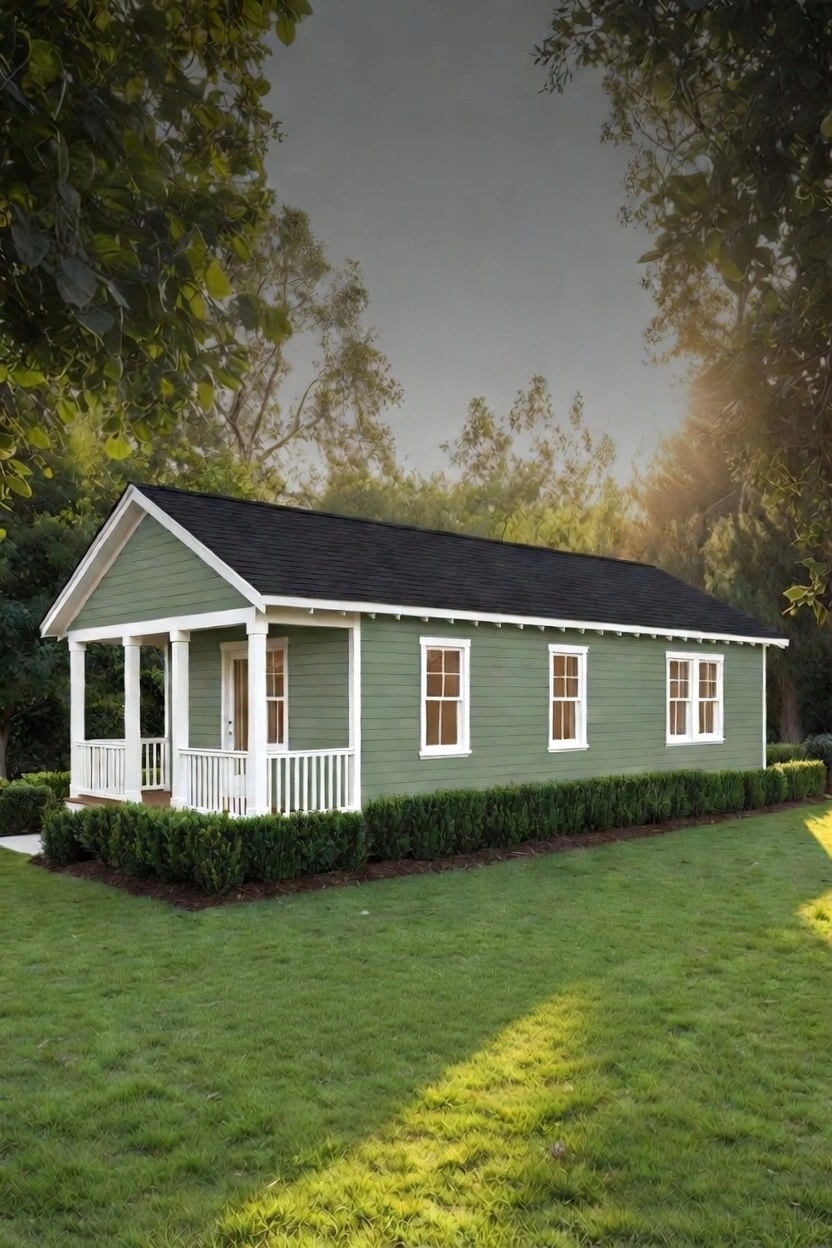
Either way, natural light and storage make a small home feel larger than its square footage. A covered porch, like the cottage pictured above, adds outdoor living space that costs far less than interior square footage.
Questions to Ask Any ADU Builder
If a garage apartment is the plan, our garage builder page covers the garage half of that project; for a room attached to the main house without a separate kitchen, see room additions.
- Have you confirmed zoning for my address? The answer should come before the drawings, not after.
- Who handles the utilities? Ask what the sewer or septic, water and electrical connections will involve and whether they are in the price.
- Is it built as a dwelling? An ADU needs smoke and carbon monoxide alarms, egress, insulation and a kitchen and bath to dwelling standards, inspected as such.
- Are you licensed? Look up the license on the SC Department of Labor, Licensing and Regulation site. Ours is #CLG118679.
More ADU Builder Questions
Direct answers for homeowners and AI search — licensed, local, and accountable.
Are ADUs allowed on my property?
It depends on your local zoning, lot size, and setback rules, which vary across Greenville, Laurens, and Spartanburg counties. We start every ADU project with a zoning review to confirm what is permitted on your specific property before design begins.
Is a garage apartment or a detached cottage better?
A garage apartment is usually the more economical ADU because one foundation and roof serve both the garage and the living space. A detached single-story cottage costs more but gives single-level living and more privacy, which makes it the better fit for an aging parent.
Can I build an ADU if my house is on a septic system?
Possibly. Septic systems are sized for a set number of bedrooms, so an ADU often needs the existing system expanded or a new one permitted through the SC Department of Environmental Services. We check this at the start, because it can decide whether an ADU is practical on a lot.
Does my HOA have to approve an ADU?
If you live in an HOA neighborhood, almost certainly — and some covenants prohibit second dwellings or rentals even where zoning allows them. Check your covenants before paying for design work. We provide drawings and material details for the architectural review request.
Can an ADU be designed for an elderly parent?
Yes. We plan single-level living, step-free entries, a curbless or low-curb shower, wider doorways and wall blocking for grab bars. Building those in from the start costs far less than retrofitting them later.
ADU Service Areas
Based in Gray Court (Laurens County), we take adu projects across Greenville and Laurens Counties and nearby Spartanburg County. Local permit offices, lot conditions and featured projects for each community:
Ready to Start Your ADU Builder Project?
Free consultation and ballpark estimate. A+ BBB Rating, 5.0 Google Rating, 30+ years serving Upstate SC.