Construction
Basement Finishing Contractor - Upstate SC
From simple storage spaces to luxury home theaters, I handle all aspects of basement finishing: egress windows, moisture control, electrical, plumbing, and complete interior finishing. Every project code-compliant and built to last.
Cost Range
$48-121 Per Sq Ft
Timeline
6-10 Weeks Typical
Experience
Since 1995
Rating
BBB A+ Rated
Basement Finishing at a Glance
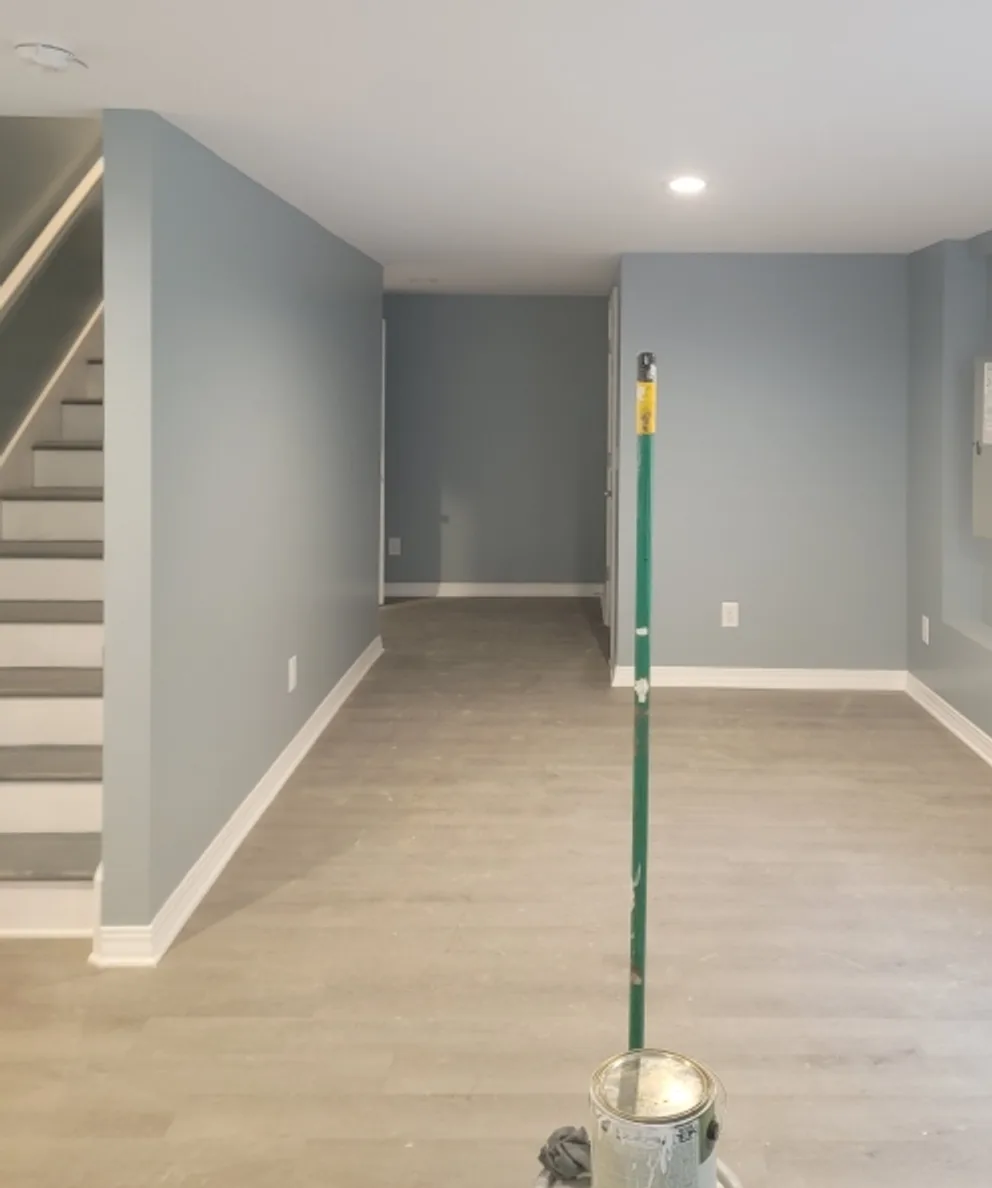
Burch Contracting finishes basements in Simpsonville, Greenville, Fountain Inn, Mauldin and Laurens County, from a single open family room to a full suite with a bedroom, bathroom and wet bar. As the licensed general contractor (SC #CLG118679) we fix moisture first, then handle egress, framing, insulation, electrical, plumbing, HVAC and finishes under one permit. Most basements take 6 to 10 weeks.
- Typical cost
- $48-121 Per Sq Ft
- Typical timeline
- 6-10 Weeks
- Permit required
- Yes — framing, electrical, plumbing and mechanical work all need a permit and inspections, pulled by us
- Moisture first
- Every basement is checked for water and humidity before any wall is framed
- Who builds it
- C. Scott Burch, SC Licensed General Contractor #CLG118679, finishing Upstate basements since 1995
- Price your own
- Use the basement finishing calculator, or read the Greenville basement cost guide
How much does it cost to finish a basement?
Basement finishing typically runs $48-121 per square foot depending on finish level. A basic living-space conversion is at the lower end, a mid-range finish with a bedroom and full bath in the middle, and a high-end finish with a wet bar, home theater wiring, and custom built-ins at the top.
How long does basement finishing take?
Finishing a basement typically takes 6 to 10 weeks, covering egress windows, moisture control, framing, insulation, electrical, plumbing, and interior finishing. Adding bathrooms or extensive custom work extends the timeline.
Do I need egress windows to finish my basement?
For any bedroom, yes. Under the 2021 residential code South Carolina uses, a new sleeping room in an existing basement needs an emergency escape opening, such as an egress window or an exterior door. Finishing an existing basement as a family room or office does not by itself trigger one, though we often recommend it for safety and daylight. We confirm the requirement with your permit office during design.
What about basement moisture and waterproofing?
We address moisture before finishing. If waterproofing or a sump pump is needed, moisture remediation typically adds $2,500 to $6,000. Skipping this step is the most common cause of finished-basement failures, so we assess and correct it up front.
Common Basement Finishing Projects
Real-world project examples with typical costs in Upstate SC:
| Project Type | Size | Typical Cost | Details |
|---|---|---|---|
| Basic 1,000 sq ft Finish | 1,000 sq ft | $47,809–$57,577 | Egress windows, vapor barrier, framing, insulation, drywall, paint, LVP flooring, basic electrical, HVAC extension |
| Mid-Range with Bedroom & Bath | 1,000 sq ft | $71,714–$86,365 | Everything in Basic plus full bathroom with ejector pump, bedroom closet, upgraded lighting, premium finishes |
| High-End Luxury Basement | 1,000 sq ft | $100,172–$120,637 | Multiple bedrooms/baths, wet bar, home theater wiring, custom built-ins, premium tile, soundproofing |
Basement Finishing Pricing Breakdown
Three pricing tiers to match your project scope and budget:
| Tier | Price Range | What's Included |
|---|---|---|
| Basic Finish | $48-58/sq ft | Simple living space conversion with egress windows, vapor barrier, framing, R-13 insulation, drywall, paint, LVP flooring, basic electrical (recessed lights, outlets), HVAC extension. |
| Mid-Range Finish | $72-86/sq ft | Everything in Basic plus full bathroom with ejector pump, bedroom closet framing, upgraded lighting (dimmers, decorative fixtures), premium paint, upgraded flooring (carpet in bedrooms, tile in bath). |
| High-End Finish | $100-121/sq ft | Luxury finishes including multiple bedrooms/bathrooms, wet bar with plumbing, home theater wiring (dedicated circuits, speaker pre-wire), custom built-ins, premium tile work, soundproofing. |
Additional Costs to Consider
Beyond base construction, budget for these potential expenses:
-
Moisture Remediation
$2,500-$6,000
if waterproofing or sump pump needed
-
Building Permits
$450-$850
Greenville County, includes all inspections
-
HVAC Upgrade
$0-$3,500
depending on existing system capacity
-
Structural Repairs
$1,500-$4,000
if foundation cracks or floor leveling required
Basement Finishing Cost Guides & Planning Articles
Cost guide
Basement Finishing Cost in Greenville, SC
Basement finishing costs in Greenville SC per square foot and by scope, computed from our own pricing, including egress, moisture control and bathrooms.
Article
Average Cost of Basement Finishing in South Carolina
Average basement finishing costs in South Carolina per square foot and by scope, computed from our own pricing, plus moisture and egress requirements.
Article
Basement Finishing Ideas for South Carolina Homeowners
Practical basement finishing ideas for South Carolina homes — rec rooms, guest suites, offices and in-law space — with what each one costs to build.
Upstate Basements Are Different: Walk-Outs, Slopes and Red Clay
Basements are not universal in South Carolina the way they are farther north. Where they exist in the Upstate, it is usually because the lot slopes: the house was built into a hillside, and the back wall opens to the yard at grade. That walk-out (or daylight) basement is the most common type we finish, and it is good news for a homeowner, because the open side brings in light, makes egress straightforward and usually means the space feels like part of the house rather than a cellar.
The buried side is where the work is. Upstate soil is dense red clay that holds water against a foundation after every heavy rain, and our summers are humid enough that an unconditioned basement collects moisture from the air as well as the ground. A finished basement here has to be built to manage both.
| Basement type | Where it is common | What it means for finishing |
|---|---|---|
| Walk-out / daylight | Sloped lots across Greenville County, including subdivisions in Mauldin and Simpsonville | Natural light and an exterior door on one side; the buried walls need the most moisture attention |
| Full below-grade | Less common; some older homes and hillside lots | Egress windows with window wells for any bedroom; drainage and dehumidification matter most |
| Split-level lower floor | 1970s–1990s neighborhoods | Partly finished already; often low ceilings, older wiring and a dated half-finish to tear out |
| Partial / garage-under | Older homes and rural Laurens County properties | Sometimes a mix of slab and crawlspace; check the transition walls carefully |
Fix the Water Before You Frame a Wall
Moisture is the reason finished basements fail, and it is cheaper to solve before the drywall goes up than after. Before we price the finish work we look at the exterior first: gutters that dump next to the foundation, downspouts without extensions and soil that slopes toward the house cause most of the water problems we see, and they are the least expensive to fix.
Inside, we look for efflorescence (white mineral deposits) on block walls, water stains at the floor joint, rusted nail heads or fasteners and a musty smell. Where water is actively coming in, the answer is drainage: an interior perimeter drain and sump pump, sometimes with exterior regrading. Where the problem is humidity rather than liquid water, a dehumidifier and proper wall insulation usually handle it. Either way, the moisture work is listed separately on the quote so you can see what it is for.
- Insulate with foam against the concrete. Rigid foam board against basement walls does not absorb moisture; fiberglass batts pressed against cool, damp block can.
- Keep framing off the slab. Bottom plates touching concrete are pressure-treated, and we leave a gap at the floor so a small leak does not wick up the drywall.
- Choose flooring that tolerates moisture. Luxury vinyl plank and tile are the standard basement floors here; solid hardwood is not.
- Plan dehumidification. An extended HVAC run or a ductless mini-split, sometimes with a dedicated dehumidifier, keeps a finished basement comfortable through July.
Egress, Ceiling Height and Other Code Requirements
A basement that is finished into living space has to meet the same residential code as the rest of the house. The rules that most often shape a basement design are below. Your permit office makes the final call on any specific plan, and we design to what they require rather than to what we can get away with.
| Requirement | What the code asks for |
|---|---|
| Bedroom egress (R310) | Every new sleeping room needs its own emergency escape opening: at least 5.7 sq ft of clear opening (5.0 sq ft at grade), 24" clear height, 20" clear width, and a sill no higher than 44" above the floor |
| Window wells (R310.4) | At least 9 sq ft of area and 36" of horizontal projection; a well deeper than 44" needs a permanent ladder or steps |
| Ceiling height (R305) | 7 feet for habitable rooms, with limited allowances for beams and ducts; this is the most common reason an older basement needs a design workaround |
| Smoke and CO alarms (R314, R315) | A permitted alteration brings smoke alarms, and carbon monoxide alarms where there are fuel-burning appliances or an attached garage, up to current requirements |
| Fireblocking (R302.11) | Furred-out walls and soffits need fireblocking so a fire cannot travel inside the wall cavity |
| Stairs (R311.7) | Handrails, headroom and riser/tread dimensions; an existing steep basement stair sometimes has to be rebuilt |
What Drives Basement Finishing Cost
The pricing table above runs from a basic open family room to a high-end build-out. Where a specific basement lands depends mostly on these:
- Plumbing. A bathroom, wet bar or laundry below the sewer line needs an ejector pump. A bathroom is usually the single biggest add-on.
- Moisture correction. Drainage, a sump pump or regrading is listed under Additional Costs above, and it is the line item worth not skipping.
- Egress. A walk-out wall often gives a bedroom its egress for free; a below-grade bedroom needs a cut opening, a window and a well.
- Ceiling obstacles. Ducts, beams and drain lines that hang below 7 feet have to be boxed, rerouted or designed around.
- HVAC capacity. Extending the existing system works when it has spare capacity; otherwise a ductless unit is the cleaner option.
- Finish level. Built-ins, a wet bar, theater wiring, soundproofing and tile are what separate the middle tier from the top one.
Basement Finishing Permits in Greenville and Laurens Counties
Finishing a basement is a permitted job. Inside city limits the permit comes from the City of Simpsonville, Fountain Inn or Mauldin; in unincorporated areas it comes from Greenville County, and around Gray Court and Laurens from Laurens County. The application typically includes a floor plan showing rooms, egress openings, and the electrical and plumbing layout.
Inspections then follow the work: framing, electrical, plumbing and mechanical rough-ins before insulation, insulation before drywall, and a final. As the general contractor of record we pull the permit and meet each inspector. Unpermitted basement bedrooms tend to surface at resale, when a buyer's inspector or appraiser asks why the square footage and bedroom count do not match the county record. For more on what needs a permit, see Do You Need Permits for Remodeling in Simpsonville?
Radon, Fuel-Burning Equipment and Air Quality
The EPA recommends testing every home for radon, and the time to test a basement is before you finish it and start spending time down there. A test kit is inexpensive; if levels come back high, a mitigation system is far easier to install before the walls are closed. See the EPA's radon guidance for how to test.
Many Upstate basements also house the furnace and water heater. Gas appliances need combustion air and clearances that a new wall cannot block, so we plan the mechanical room first and build the finished space around it, with an access door sized for future equipment replacement.
Ideas That Work Well in Upstate Basements
The most-requested layouts are a family or media room with a half or full bath, a guest suite for visiting family, a home office with natural light from the walk-out side, and a gym or hobby room. Our basement finishing ideas article goes through layouts in more detail, and what basement finishing costs in South Carolina covers the budget side.
More Basement Finishing Questions
Direct answers for homeowners and AI search — licensed, local, and accountable.
Can you add a bathroom or bedroom in a finished basement?
Yes. Our mid-range and high-end tiers include full bathrooms — often with an ejector pump for below-grade plumbing — plus bedrooms with code-compliant egress and closets. High-end finishes can also include wet bars, home theaters, and soundproofing.
Is a finished basement counted as square footage when I sell?
Appraisers generally report below-grade finished space separately from above-grade living area, so it usually adds value at a lower rate per foot than an addition. A walk-out basement with windows, a bath and permitted bedrooms is the strongest version. Keeping the work permitted is what lets it be counted at all.
Can I finish part of my basement and leave the rest for storage?
Yes, and it is common. We frame a finished area with its own egress and lighting, and leave the mechanical room and a storage area unfinished with code-required access. It lowers the cost and keeps the furnace and water heater easy to service.
Do basement walls need to be insulated in South Carolina?
Finished basement walls that enclose conditioned space are insulated under the energy code. We use rigid foam against the concrete, which does not hold moisture, and then frame inside it. It also keeps the walls from feeling cold and damp in winter.
Will my existing HVAC system heat and cool a finished basement?
Sometimes. If the system has spare capacity, we extend ducts into the new space; if not, a ductless mini-split is usually the better choice and gives the basement its own thermostat. Either way, controlling summer humidity is part of the plan.
Basement Finishing Service Areas
Based in Gray Court (Laurens County), we take basement finishing projects across Greenville and Laurens Counties and nearby Spartanburg County. Local permit offices, lot conditions and featured projects for each community:
Ready to Start Your Basement Finishing Project?
Free consultation and ballpark estimate. A+ BBB Rating, 5.0 Google Rating, 30+ years serving Upstate SC.