Accessibility
ADA Compliance & Accessibility Contractor - Upstate SC
From aging-in-place bathroom conversions to commercial ramps and doorway widening, we design and build accessibility modifications that meet current ADA standards — for homeowners and business owners across Upstate SC.
Cost Range
Custom Quote
Timeline
Varies by Scope
Experience
Since 1995
Rating
BBB A+ Rated
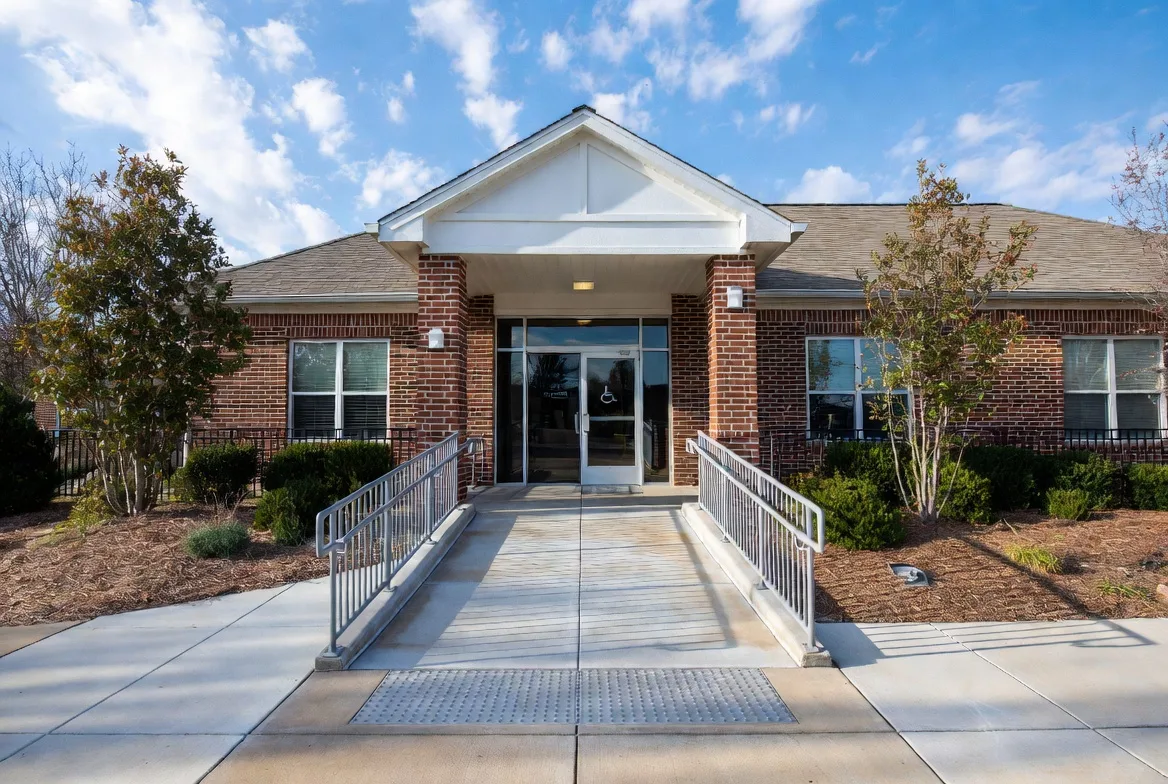
ADA Compliance & Accessibility Modifications at a Glance
Burch Contracting builds accessibility modifications for businesses and homes across Greenville, Simpsonville, Mauldin, Fountain Inn and Laurens County: ramps and handrails, accessible restrooms, wider doors and routes, roll-in showers, grab bars and accessible parking. For businesses we build to the 2010 ADA Standards for Accessible Design and pull the permit; for homes we apply the same proven dimensions where they help the person living there. Every project is quoted after an on-site assessment.
- Typical cost
- Custom Quote
- Typical timeline
- Varies by Scope
- Standard we build to
- The 2010 ADA Standards for Accessible Design (commercial); the same dimensions applied by choice at home
- Who must comply
- Businesses open to the public and commercial facilities — not private single-family homes
- Permit
- Usually yes for ramps, restrooms, doors and structural changes; we pull it
- Licensed
- SC General Contractor #CLG118679 and NC (Limited) #107292, since 1995
What ADA and accessibility modifications do you do?
We design and build ramps, curbless roll-in showers, grab bars, ADA-height fixtures, widened doorways and hallways, accessible flooring transitions, and ADA-compliant restrooms for both homes and businesses across Upstate SC.
Do you handle commercial ADA compliance?
Yes. For businesses we build accessible entrance ramps and handrails, ADA-compliant restroom retrofits, door width and hardware upgrades, and parking and path-of-travel accessibility, and we handle code compliance review and permitting.
Do you do aging-in-place modifications for homes?
Yes. Residential accessibility work includes curbless and roll-in showers, grab bars, widened doorways, wheelchair and threshold ramps, and accessible flooring — modifications that support independence and safety for aging in place.
Will the work meet current ADA standards?
Yes. We evaluate the space against current ADA standards, identify what needs to change, and complete the modifications to code. With 30+ years of local experience handling permits and inspections, compliance is built into how we work.
What We Handle
Residential Accessibility
- Curbless / roll-in shower conversions
- Grab bars and ADA-height fixtures
- Widened doorways and hallways
- Wheelchair ramps and threshold ramps
- Accessible flooring transitions
Commercial ADA Compliance
- Accessible entrance ramps and handrails
- ADA-compliant restroom retrofits
- Door width and hardware upgrades
- Parking and path-of-travel accessibility
- Code compliance review and permitting
ADA Compliance & Accessibility Modifications at a Glance
| Category | What's Included |
|---|---|
| Residential Accessibility | Curbless / roll-in shower conversions; Grab bars and ADA-height fixtures; Widened doorways and hallways; Wheelchair ramps and threshold ramps; Accessible flooring transitions |
| Commercial ADA Compliance | Accessible entrance ramps and handrails; ADA-compliant restroom retrofits; Door width and hardware upgrades; Parking and path-of-travel accessibility; Code compliance review and permitting |
Who the ADA Applies To — and Who It Doesn't
Title III of the Americans with Disabilities Act covers places of public accommodation — stores, restaurants, medical and professional offices, hotels, gyms — and commercial facilities such as offices and warehouses. Those businesses have an ongoing duty to remove architectural barriers where that is readily achievable, and any new construction or alteration has to meet the 2010 ADA Standards for Accessible Design. The standards themselves are published free by the Department of Justice and explained in plain language by the U.S. Access Board.
Private homes are not covered by the ADA. When a homeowner asks for an "ADA bathroom," what they almost always want is an accessible bathroom built to the same dimensions — and those dimensions are a good place to start, because they are tested and widely understood. At home, though, the right grab bar height or shower size is the one that fits the person using it, and we design to that rather than to a commercial rulebook.
Key 2010 ADA Standards Dimensions
These are the dimensions that drive most of the commercial accessibility work we build. They are a summary, not the full standard — exceptions and conditions apply, and the plan reviewer works from the complete text.
| Element | Requirement | Section |
|---|---|---|
| Accessible route width | 36" minimum clear width (may narrow to 32" for up to 24" of length) | 403.5.1 |
| Turning space | 60" diameter circle, or a T-shaped space within a 60" square | 304.3 |
| Door clear opening | 32" minimum, measured with the door open 90 degrees | 404.2.3 |
| Door thresholds | 1/2" maximum height, beveled | 404.2.5 |
| Door hardware | Operable with one hand, without tight grasping or twisting; mounted 34"–48" above the floor | 404.2.7 |
| Ramp slope | 1:12 maximum running slope (one inch of rise per foot of run) | 405.2 |
| Ramp rise and landings | 30" maximum rise per run; level landings at top and bottom at least 60" long | 405.6, 405.7 |
| Ramp handrails | Both sides where the rise is more than 6"; top of gripping surface 34"–38" high | 405.8, 505.4 |
| Grab bars | Top of gripping surface 33"–36" above the floor; side-wall bar 42" long minimum, rear-wall bar 36" minimum | 609.4, 604.5 |
| Toilet location | Centerline 16"–18" from the side wall; seat 17"–19" high | 604.2, 604.4 |
| Lavatory | Rim or counter 34" maximum height, with knee and toe clearance below | 606.3 |
| Operable parts | Within a 15"–48" reach range | 308 |
Commercial ADA Compliance: Where Businesses Usually Fall Short
Most of the barriers we are asked to fix in Upstate commercial buildings are the same handful of items, and they are usually found in the order a customer meets them:
- Parking and the route in. Accessible spaces with the required access aisles and signage — at least one in six accessible spaces van-accessible — and a route from those spaces to the entrance without steps, steep slopes or broken pavement.
- The entrance. A step at the door, a threshold that is too tall, a door that is too heavy or too narrow, or a knob instead of lever or push hardware.
- Restrooms. Too little clear floor space, a toilet too close to or too far from the wall, missing or misplaced grab bars, a lavatory without knee clearance, or a door that swings into the required space.
- Counters and routes inside. Sales and service counters with no lowered section, and aisles narrowed by fixtures or stock.
Our Simple Process
-
1
Free Consultation
Discuss your accessibility needs or compliance requirements. No obligation.
-
2
On-Site Assessment
We evaluate the space against current ADA standards and identify what needs to change.
-
3
Compliant Construction
We complete the approved modifications to code, with full attention to detail.
Alterations, Path of Travel and Tax Incentives
When a business renovates, the altered area has to be built to the standards, and federal rules also require making the path of travel to an altered primary function area accessible, up to the point where that cost would be disproportionate — defined in 28 CFR 36.403 as more than 20% of the cost of the alteration. If you are planning a commercial upfit, accessibility belongs in the budget from the start.
Two federal tax provisions can offset part of the cost of barrier removal: the Disabled Access Credit for eligible small businesses, claimed on IRS Form 8826, and the barrier removal deduction under Section 190 of the tax code. Eligibility and amounts depend on your business, so talk to your tax professional; we provide the itemized invoices and scope descriptions they ask for.
Accessibility at Home: Aging in Place and Universal Design
At home the goal is independence and safety, and the most useful changes are often the simplest. These are the residential modifications we are asked for most:
| Modification | What it solves | Good to know |
|---|---|---|
| Roll-in or curbless shower | Stepping over a tub wall — one of the most common causes of bathroom falls | See ADA bath-to-shower conversions and its calculator |
| Grab bars | Support at the toilet, shower and tub | Must be anchored into solid blocking, not drywall anchors; we add blocking when walls are open |
| Wider doorways | Walker and wheelchair access to bedrooms and baths | A 36" door gives roughly 32" clear; offset hinges can gain space without reframing |
| Ramps | A no-step entry | Plan for the 1:12 slope: a 24" rise needs about 24 feet of ramp plus landings |
| Threshold ramps and flooring transitions | Trip hazards and wheel catches between rooms | Often the least expensive change with the most daily benefit |
| Lever handles, rocker switches, comfort-height toilets | Weak grip and reach | Simple swaps that can be done in a single visit |
How an Accessibility Project Works With Us
- We assess the space and the person. For a business, against the 2010 Standards; for a home, around who is using it and how — including an occupational therapist's recommendations if you have them.
- We price the full scope in writing, item by item, so a business can see what each barrier costs to remove and a family can phase the work if needed.
- We pull the permit and build to it, coordinating any electrical, plumbing or structural changes, and scheduling inspections in Greenville County, the cities within it, or Laurens County.
Why Work With Us
- Full compliance with current ADA standards
- Improved safety for residents, employees, and customers
- Greater independence and accessibility at home
- 30+ years local experience with permits and inspections
More ADA Compliance & Accessibility Modifications Questions
Direct answers for homeowners and AI search — licensed, local, and accountable.
How much do accessibility modifications cost?
Accessibility work is quoted custom based on scope, since a single grab-bar and threshold project differs greatly from a full commercial restroom retrofit. We provide a free consultation and ballpark range; a detailed written estimate is available for a fee, credited back if you hire us.
Does the ADA apply to my home?
No. The ADA covers businesses open to the public, commercial facilities and government buildings, not private single-family homes. Homeowners who want an "ADA" bathroom or entry are choosing accessible design, and we build to the ADA dimensions where they suit the person using the space — and adjust them where something else works better.
What is the maximum slope for a wheelchair ramp?
Under the 2010 ADA Standards a ramp can rise no more than one inch for every 12 inches of length (1:12), with no more than 30 inches of rise between level landings and handrails on both sides once the rise passes 6 inches. That means a 24-inch rise needs roughly 24 feet of ramp, so ramps often need to switch back or wrap along the house.
Are there tax credits for ADA improvements to a business?
Yes, there are two federal provisions: the Disabled Access Credit for eligible small businesses (IRS Form 8826) and the Section 190 deduction for removing architectural barriers. Whether your business qualifies, and for how much, is a question for your tax professional; we provide itemized invoices that describe the accessibility work.
How wide does a doorway need to be for a wheelchair?
The ADA Standards require at least 32 inches of clear opening, measured with the door open 90 degrees — which a standard 36-inch door provides. A 30- or 32-inch door does not. At home, offset (swing-clear) hinges can sometimes add the needed inches without reframing the opening.
Accessibility Service Areas
Based in Gray Court (Laurens County), we take accessibility projects across Greenville and Laurens Counties and nearby Spartanburg County. Local permit offices, lot conditions and featured projects for each community:
Ready to Start Your ADA Compliance & Accessibility Modifications Project?
Free consultation and ballpark estimate. A+ BBB Rating, 5.0 Google Rating, 30+ years serving Upstate SC.